


Good enough for Google, but not for college? One student’s fight against discriminatory admissions
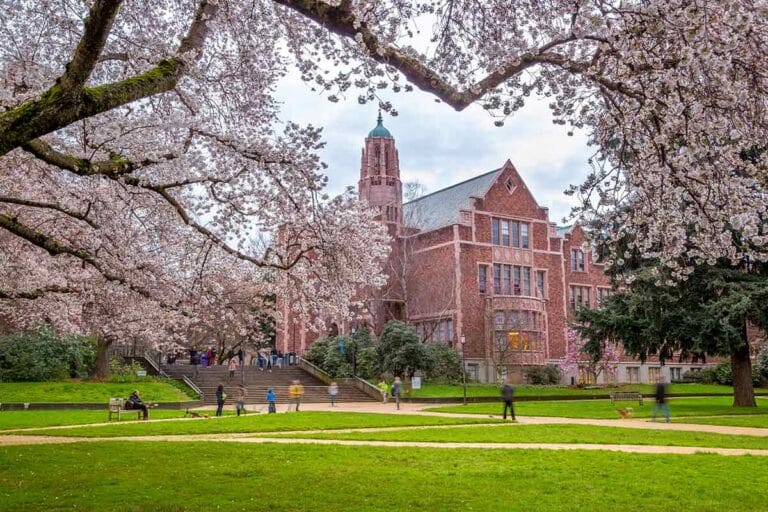
What does it take to earn a place at one of America’s top universities? On paper, Bay Area high school student Stanley Zhong seemed like a textbook shoo-in for admission to any of the schools on his short list. But as Stanley and his family would soon discover, being qualified for admission and getting admitted into college are not necessarily the same thing.
Stanley is now 21 years old, and instead of graduating college and entering the job market, his path has taken an unexpected turn that has landed him a PhD-level career—and a stack of college rejection letters. In this bizarre plot twist, Stanley could end up in a courtroom before he ever sets foot in a college classroom.
An extraordinary talent emerges
As a teenager, Stanley Zhong was just an ordinary kid—albeit with extraordinary abilities.
When he was 11, his parents, who were both born in China and met while attending college in America, moved Stanley and his younger brother to the Palo Alto area, where they have lived ever since.
In true Gen Z fashion, Stanley’s unconventional story begins with Minecraft.
Like many kids his age, Stanley begged his parents to buy him Minecraft. His father, Nan, wanted to encourage Stanley to do more than play video games all summer long, so he and his wife came to him with a proposition: They’d buy him the game if he agreed to read “Adventures in Minecraft.”
It was an offer Stanley could not refuse.
“The book showed you how to set up a Minecraft server so that you could write Python code to interact with the world and build basically whatever you wanted within that virtual world,” Stanley explained. “The deal was that I could play Minecraft so long as I also used it to learn coding.”
Stanley fell in love with coding and how it gave him a way to create. “I think that just the ubiquity of software throughout the world makes it so that if you want to build something that a lot of people would find helpful, you can just do it.” Permissionless innovation appealed to Stanley even at a young age.
Nan realized his son had a gift when Stanley was 12. Without expecting anything beyond keeping him off video games, Nan gave Stanley some basic web task automations for his startup. “To my great surprise, he did it in a way that was better than I could have,” Nan says. “By the end of the summer, he automated a whole bunch of things that I probably could not have done myself, and he did it in a way that’s more resilient, more reliable.”
Soon Nan, himself a strong coder, was turning to Stanley for help. He even challenged his son to a coding contest. “That contest showed that he was way advanced than I was at that point already. I remember that it was a contest with five problems with increasing level of difficulty. By the time I solved the first one, he already finished all five,” Nan says.
While he was a superstar coder after school, Stanley took regular classes with his classmates and enjoyed ultimate frisbee and climbing. He co-founded a nonprofit that taught coding to more than 500 students in underserved communities, earning him the President’s Volunteer Service Award. He also placed among the top 500 programmers worldwide in Google Code Jam and Meta Hacker Cup, competitions that attract seasoned software professionals.
His success even put him on Google’s radar. The company reached out with a job opportunity, unaware Stanley was only 13.
Coding for a cause
With so much success at a young age, people often assume Stanley’s parents were helping him find these opportunities. In reality, they often learned of his achievements after the fact.
One day, Stanley showed up at dinner wearing a Google Code Jam T-shirt; only then did Nan learn he had reached the semifinals. And when Stanley made the finals of MIT’s Battlecode high school division, his parents found out because he needed them to accompany him to Boston.
In the middle of his sophomore year, the COVID-19 pandemic hit. With so much of the world moving online, Stanley saw an opportunity to help people. E-signing services could be expensive, especially for small businesses struggling under COVID-era closures. Stanley created RabbitSign, which offered unlimited free e-signing. “It felt like it was the right thing to do,” Stanley says. “If I can do this thing and help people, I might as well do it.”
This wasn’t the only time Stanley tried to help during the pandemic.
As unemployment claims overwhelmed aging systems written in COBOL, a decades-old programming language, Stanley taught himself COBOL and sent his code to the CEO of COBOL Cowboys, a Texas-based consulting firm. The CEO liked what he saw and called Stanley back, but worried clients would balk at having a teenager work on their systems. Even though the company specialized in aging systems, it couldn’t put the young programmer on a client project.
Good enough for Google
Stanley credits much of his success to the lack of pressure from his parents. “I think it’s a little bit the opposite of my parents pressuring me. I think both my mom and dad gave me a lot of space to work on and do whatever I found interesting. And because I found these things interesting, I was able to put more effort into it.”
Despite his achievements, there is not a trace of arrogance about Stanley. Still, he hoped his coding achievements would appeal to the colleges he was applying to.
As senior year began, Stanley applied to a number of schools.
First came a rejection from the University of California, Davis (UC Davis). Then other UC campuses. Then more rejections, which included Cornell and the University of Washington (UW).
Something didn’t seem right. Neither Stanley nor his parents believed he was entitled to admission. But with his accomplishments, 1590 SAT score, 4.42 weighted GPA, and ranking among the top 9% of his class, they had questions. Stanley had been so independent throughout the admissions process that his parents hadn’t even known the rejection letters had arrived. But Nan was proud that Stanley was “resilient enough to absorb that kind of a disappointment.”
Wondering if Stanley’s experience was isolated, Nan reached out to a Chinese parent group on WeChat. The next day, he woke to a slew of calls and emails. “Within 24 hours, it was pretty much all over the Chinese American community across the country. And then I started getting emails saying, ‘This is not the first time we’re seeing this. This is similar to my kid’s application process.’”
His confusion was only amplified by what else had happened during Stanley’s senior year.
An Amazon review concluded that RabbitSign, built on Amazon Web Services, was one of the most efficient and secure accounts they had ever reviewed—a rarity even with adult programmers. Amazon even featured it in a case study. The review’s author, unaware of Stanley’s age, called and invited Stanley to apply for an L4 position requiring a PhD or equivalent job experience. Stanley was intrigued, but he also wondered if Google might still be interested.
Although the college rejections stung, he planned to attend the University of Texas at Austin, where he’d been accepted. While he was at orientation in Austin, Google emailed to offer him an interview.
Confident in his abilities, Stanley dropped out on the spot. Soon he was offered a PhD-level position at Google.
While Google was the best alternative, Stanley still longs for the college experience. Just because he excels at coding doesn’t mean he wants to commit to that career for life. He wants the chance to explore other fields, like philosophy, and experience the friendships and social life that make college a rite of passage.
Nan was likewise grateful that Stanley had Google, but his concerns remained. And with Stanley’s younger brother preparing for college admissions, the problem was still very much present for the Zhongs.
A fight for equal treatment
While Stanley embarked on his career, Nan found himself accidentally becoming something of an activist. He contacted UC officials and appealed to the Board of Regents but received no answers to his questions about the admissions process. Eventually, he received an email from UC’s admissions director essentially saying that his allegations of racial discrimination were unfounded because discrimination was banned by law.
Nan was dumbfounded. “What are they talking about? If their logic can stand, then any criminal can be exonerated because what they’re accused of is against the law,” he pointed out. This was a turning point for Nan, who realized that academic institutions were not the bastions of discourse he had believed. He contacted lawmakers and Governor Gavin Newsom but got nowhere.
That’s when Nan turned to the courts.
He initially used AI to research and begin the lawsuit, but the family needed attorneys with constitutional law experience. When Pacific Legal Foundation connected with Nan, we were eager to join the fight and, together, have filed a lawsuit against the University of Washington.
While Stanley had been rejected by several universities, UW’s admissions policies made him especially well positioned to challenge the school.
The Constitution demands that individuals be treated as equals by the government and institutions that receive federal funds—like the University of Washington. In its 2023 decision in Students for Fair Admissions(SFFA) v. Harvard, the Supreme Court held that the racial preferences in college admissions violated the Constitution’s Equal Protection Clause, reversing decades of precedent.
While UW uses words like “holistic review” to describe its admissions process, PLF argues that its policies penalize Asian applicants based on their race.
The university president during Stanley’s admissions cycle had publicly opposed race-neutral mandates on multiple occasions, arguing that Washington’s prohibition on racial preferences put UW at a competitive disadvantage. Following the Supreme Court’s decision in SFFA, she published a statement titled “Affirmative action ruling won’t change our values or our mission,” declaring that UW remained “wholeheartedly committed” to its diversity objectives.
After Stanley’s story went public, multiple independent admissions experts unconnected to UW reviewed his application materials; none could identify a legitimate, performance-based reason for UW’s rejection.
As someone who grew up in China during the Cultural Revolution, Nan is unsettled by what he sees happening in American universities. He feels like he’s “seen this movie before.” He remembers the Chinese government forcing people to view others through the lens of group identity, something he says was a “complete disaster.”
Part of the reason Nan decided to move to America and become a citizen is that he appreciates the power individuals have to hold their government accountable when their rights have been violated. As for Stanley, he says the lawsuit feels like “the right thing to do,” for him, his brother, and future students.
PLF has been fighting discriminatory admissions policies in K–12 and higher education and will keep fighting for the Zhongs and other students who want to be judged on their individual merits, not their race.
The Constitution is clear: Universities cannot sort applicants by race. PLF is committed to fighting discriminatory admissions policies in public K–12 and higher education institutions. And we will keep fighting on behalf of the Zhongs and other students who merely wish to be judged on the content of their character, and not the color of their skin.