

More Americans are facing Fourth Amendment violations at the border
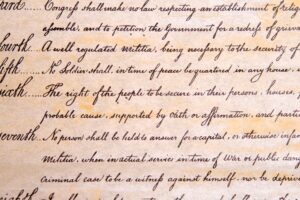
The Fourth Amendment provides that people shall “be secure in their persons, houses, papers, and effects, against unreasonable searches and seizures,” and no warrant shall be issued without “probable cause.” Yet, U.S. Customs and Border Protection (CBP) officers routinely violate both provisions, acting in accordance with a 2018 Directive that requires them to have only “reasonable suspicion” for the most intrusive searches of personal electronic devices. Meanwhile, Immigration and Customs Enforcement (ICE) has its own Directive, issued in 2009, permitting its “Special Agents” to conduct even the most intrusive searches into our digital lives without any suspicion whatever.
In two policy explainers—Searches of Electronic Devices at Ports of Entry and The Fourth Amendment-Free Zone in the United States—Mitchell Scacchi, Kyle Sweetland, and Amy Peikoff articulate how the Fourth Amendment search and seizure and warrant clauses are routinely violated in border zones and at points of entry.
In Searches of Electronic Devices at Ports of Entry, the authors note how “CBP officers also perform warrantless searches of personal electronic devices such as cell phones and computers…. The stated purpose for these activities is to stop harmful content, terrorists, and illegal immigrants from entering the United States.”
Since 2015, the number of warrantless searches has more than quadrupled, reaching over 46,000 total searches in 2024.
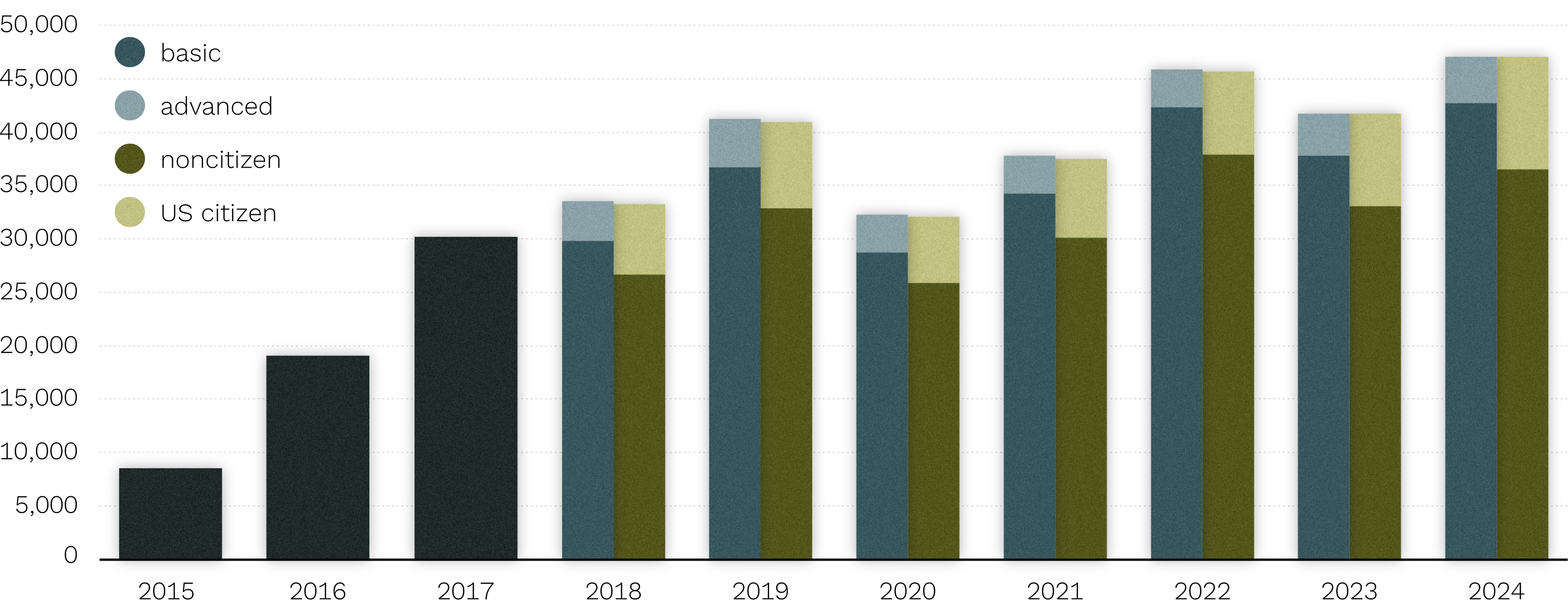
Sources: CBP Releases Statistics on Electronic Device Searches, CBP Releases Updated Border Search of Electronic Device Directive and FY17 Statistics, and CBP Enforcement Statistics Fiscal Year 2024.
Seventy-eight percent of the electronic devices that were searched in 2024 belonged to non-citizens—which is equivalent to about 36,500 of the nearly 47,000 total people who were stopped and had their devices searched at the border in 2024. If criminal activity is discovered on the electronic device, the person in possession of the device can be arrested.
“Non-citizens have been detained and denied entry to the country as a result of searches,” the report adds. But those who fail to comply with the search “are subject to interrogation and seizure of their electronic device or the contents on it, even if those contents are protected from access by federal law.”
Electronic devices and their contents are personal property, protected as “papers” and “effects” under the Fourth Amendment. They deserve the same constitutional protections as physical objects and documents one owns and stores in one’s home—and yet, warrantless searches of these are not the only Fourth Amendment violations occurring at U.S. border locations around the country.

In the second policy explainer, The Fourth Amendment-Free Zone in the United States, the authors articulate how federal government agents have the “power to conduct warrantless and suspicionless searches of vehicles within 100 miles of a US border,” not just the southern border. This 100-mile border includes approximately 228 million people, which means the Fourth Amendment rights of about two-thirds of the U.S. population are significantly weakened, even in their homes and workplaces.
Based on the Immigration and Nationality Act of 1952 and federal regulations, “the federal government can stop, board, and search any car, bus, train, plane, or boat without a warrant and without probable cause” within 100 miles of the U.S. border. With more than 200 temporary and permanent checkpoints scattered around the country, federal government agents have numerous opportunities to stop and inspect vehicles without a warrant or probable cause.
These policies and practices pose a significant threat to Americans’ Fourth Amendment rights. Case in point: Wilmer Chavarria, who was detained, and whose devices were searched unlawfully in July by government agents at Houston’s George Bush Intercontinental Airport.
Wilmer Chavarria is a naturalized U.S. citizen since 2018, a school district superintendent in Vermont, and a graduate of the University of New Mexico and Harvard—and yet, he was detained by CBP officers in Houston while on his way home from Nicaragua.
After being detained and verbally abused for over four hours, simply because he tried to assert his Fourth Amendment rights, Chavarria was released, suggesting the officers found zero evidence of criminal activity. Yet, his computer, cell phone, and tablet were searched without a warrant, and Chavarria has no idea whether the CBP kept a digital copy of his records, including confidential student records from his school district.
With the help of Pacific Legal Foundation, Wilmer Chavarria has taken on the Department of Homeland Security for its officers’ and agents’ unlawful actions. He understands that, unless these policies are challenged and changed, these unconstitutional practices at the border will persist, threatening the individual liberties of all Americans.