


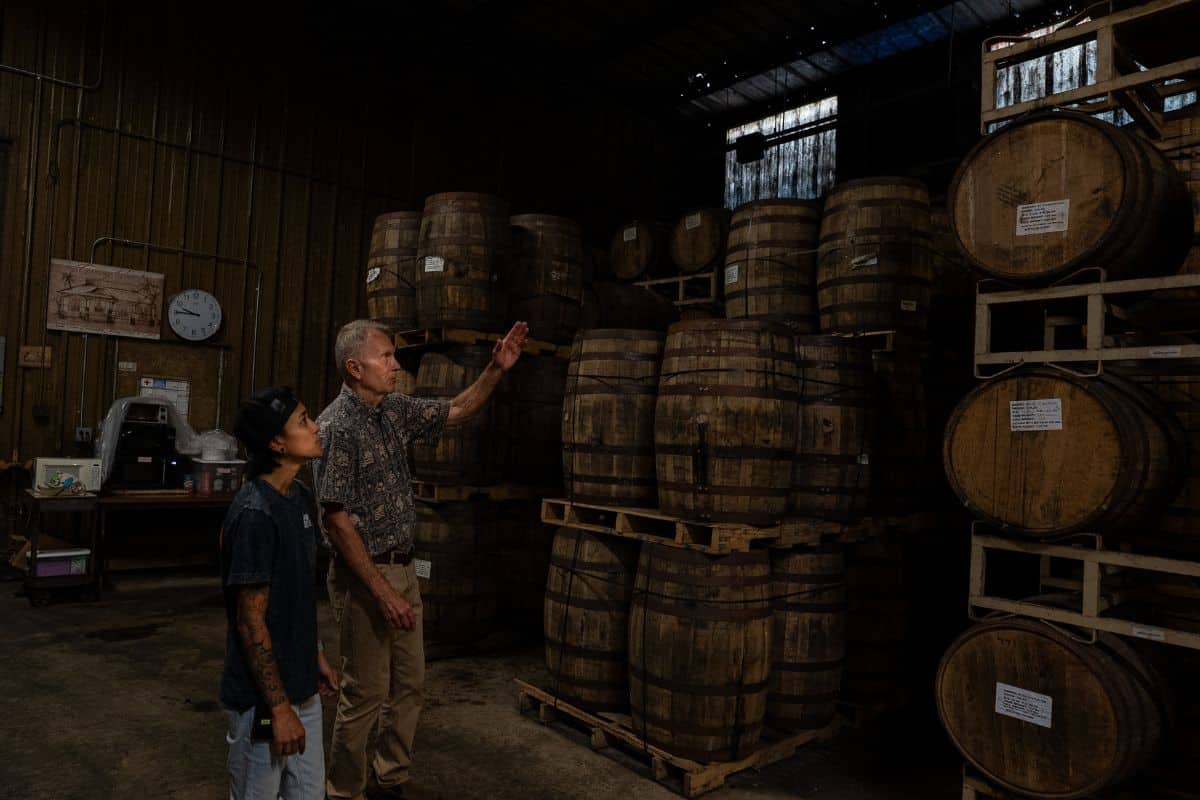
Kōloa Rum Company has crafted premium rums on the Hawaiian island of Kauai since 2009. The distillery’s name honors the region’s rich sugarcane heritage that began in 1835 with the establishment of Hawaii’s first commercial sugar mill in the nearby town of Kōloa. “It all started here,” locals say of Kōloa, where sugar drove Hawaii’s economy for generations.
Under CEO Bob Gunter’s leadership, this entrepreneurial success story seeks to celebrate the distillery’s historical connection, infusing its rums with the spirit of the island’s agricultural traditions.
While Kōloa Rum Company honors Hawaii’s past, an outdated federal law known as the Jones Act threatens its future. Adopted in the aftermath of World War I, this 1920 law requires all shipping between U.S. ports to use vessels that are built, owned, and crewed by U.S. citizens. The Jones Act’s purported intent was to prevent dependence on foreign shipping with a fortified domestic shipping fleet. Its real intent was protectionism. Instead of building new ships, the Jones Act built trade barriers that forbid foreign competition with American shipping to this day.
On its own terms, the Jones Act has been a massive failure. The number of American cargo ships has shrunk dramatically since the law passed — today fewer than 100 remain, all with quality far worse than foreign cargo ships. Those remaining ships largely exist to maintain a monopoly on shipping between the contiguous U.S. and ports in Alaska, Hawaii, and Puerto Rico.
The Act’s harmful consequences to businesses and consumers are well-documented. Goods shipped to Hawaii often cost twice as much as in other states — a daily obstacle for Kōloa Rum Company, which must import essential materials like bottles and packaging that cannot be sourced locally. As a result, it is nearly impossible for Kōloa Rum Company to compete with both foreign and domestic rum producers who aren’t shackled by the Jones Act.
The shipping logistics required by the Jones Act are as absurd as they are expensive. Because no international vessels may serve Hawaii directly, Kōloa Rum Company must first ship products to Los Angeles, then on to destinations like Australia. And the trip from Hawaii to Los Angeles costs nearly three times more than shipping from Los Angeles to Australia.
The Jones Act isn’t just bad for business — it’s illegal. The Constitution’s Port Preference Clause prohibits Congress from favoring ports of one state over those of another to ensure equal treatment in interstate commerce. The Jones Act, however, was specifically designed to disadvantage Hawaii and Alaska, then territories, despite strong opposition to the law’s discriminatory effects from Hawaiian and Alaskan officials.
Bob Gunter and Kōloa Rum Company filed a federal lawsuit with the help of Pacific Legal Foundation attorneys challenging the Jones Act’s constitutionality under the Port Preference Clause. On Jan. 20, 2026, the case was dismissed.
The Jones Act continues to impose its costs on Hawaii’s businesses and families. The constitutional questions Kōloa Rum raised — whether a century-old protectionist law can discriminate against American citizens based solely on where they live — remain.
What’s At Stake?
- The Constitution demands that each state’s ports must be treated equally.
- The Jones Act is an outdated, discriminatory law that stifles competition, limits the economic opportunities of our client, and increases the cost of goods for all Americans.