


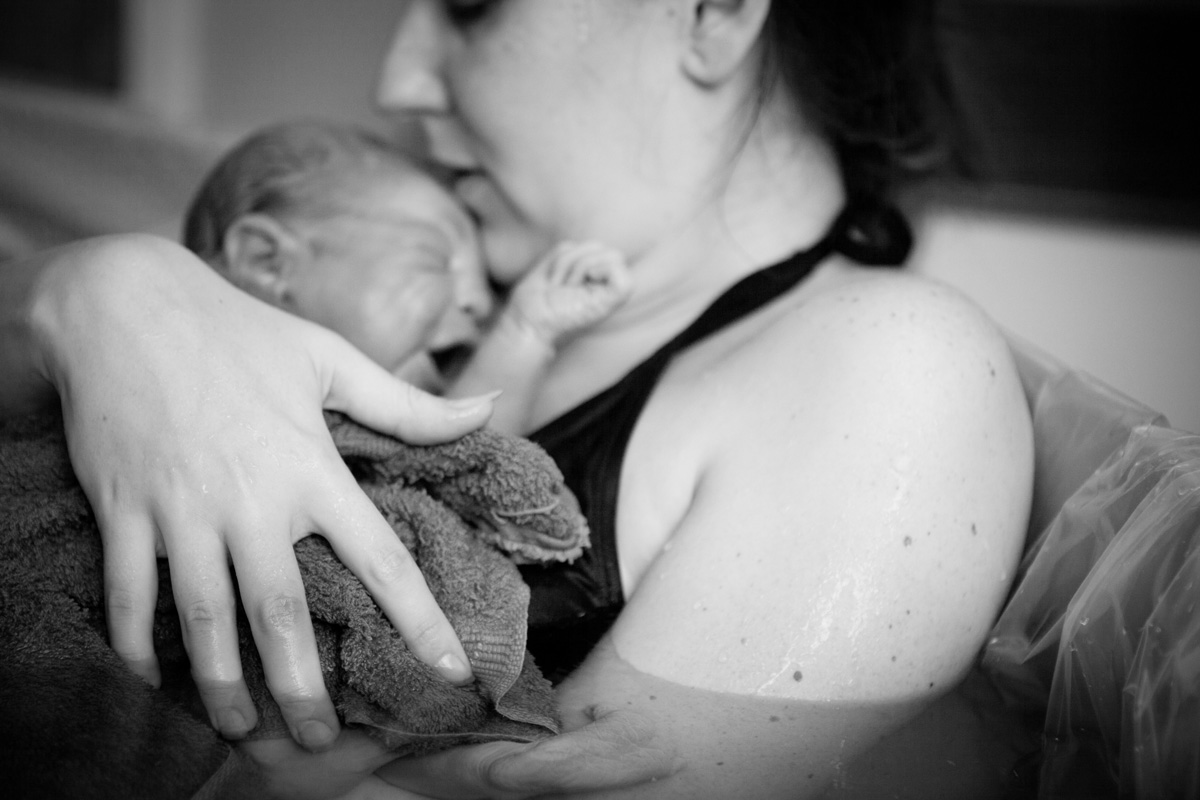
Emily Tvrdy has spent years helping mothers give birth as a labor-and-delivery nurse in rural Nebraska. She also learned firsthand, through her own four pregnancies, how deeply the support surrounding childbirth can shape the experience.
Her first delivery was in a hospital. She describes the experience as traumatic, involving complications and a long separation from her newborn son. Her next birth, also in a hospital, was a breeze; in fact, it was so fast that the doctor didn’t make it in time. It showed her how well labor could unfold with minimal intervention, and she felt increasingly certain that her third birth should take place at home.
Her home birth went smoothly—but Nebraska law prohibits certified midwives from attending home births, so Emily had to deliver without the care of a medical professional. The stress of that pushed her back into the hospital for her fourth child.
Now, as she prepares to welcome her fifth, Emily has decided to fight back. She desperately wants a home birth that is safe, calm, and spiritual, free from unnecessary intervention and attended by a licensed medical professional. And she believes every woman in Nebraska deserves the freedom to make the same choice.
Emily, along with Amanda Musilek, another expectant mother in Nebraska, filed a federal lawsuit to restore their right to birth freedom for themselves and for women across Nebraska. They are represented free of charge by Pacific Legal Foundation.
Their lawsuit argues that Nebraska’s ban violates the Fourteenth Amendment’s protection of the fundamental right to choose the manner and circumstances of giving birth—a right consistent with the Supreme Court’s long recognition of family autonomy and privacy, and one the state cannot restrict without a compelling interest.
The ban also violates the First Amendment and Nebraska’s First Freedom Act by forcing the women into an impossible choice: abandon their religious values, give birth without professional assistance, or break the law. That kind of coercive dilemma constitutes a substantial burden on religious exercise that the State cannot justify.
Nebraska is the only state to impose this ban. The research is clear that CNM-assisted care produces better outcomes, lower costs, and fewer unnecessary interventions—especially in rural areas where maternity care is already scarce.
No mother should have to choose between her faith, her safety, and the law. Emily and Amanda’s lawsuit aims to prevent the State from forcing any other Nebraskan mothers to make it.
What’s At Stake?
- The Constitution protects the rights of individuals to make intimate decisions about family and childbirth free from government interference. A state that burdens that right without a compelling justification violates the Fourteenth Amendment.
- The government cannot force a woman to choose between following the law and practicing her faith. When a law substantially burdens religious exercise without a compelling interest, it violates both the First Amendment and Nebraska’s First Freedom Act.