

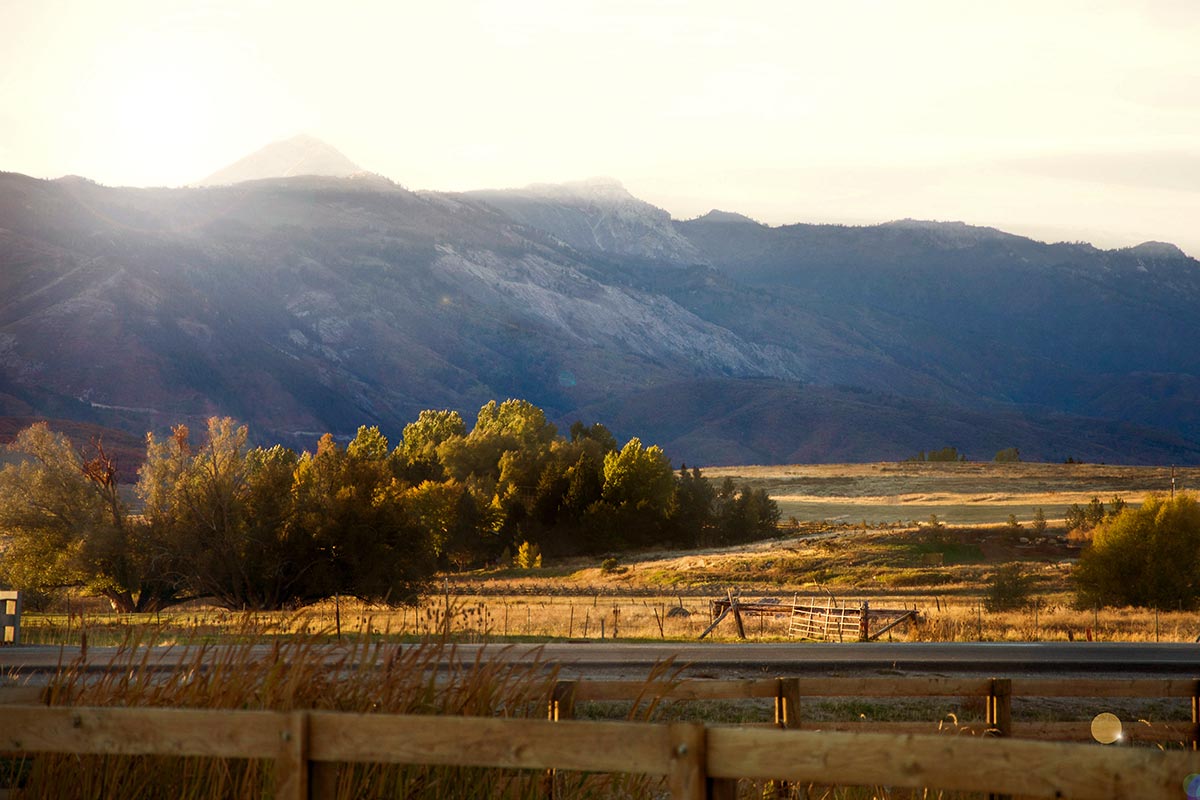
After decades of work across the state, Utah real estate developer Lew Swain decided to tackle one final project. A 142-acre lot in Box Elder County provided him with a perfect opportunity.
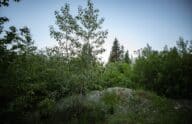
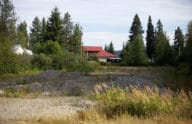
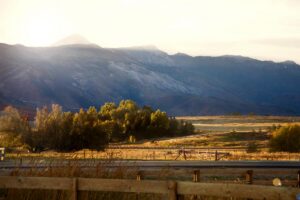
Swain purchased the lot through his business, Willard Land, LLC. Alongside his partner Brent Bailey, he developed plans to transform the lot into the “Old Farm Subdivision.” The project aims to add about 265 single-family homes to the rapidly growing area north of Salt Lake City. In addition, improvements to the city of Willard’s water and sewer infrastructure to be undertaken by Willard Land as part of the project will constitute the most significant public utility infrastructure improvements in the Willard area in forty years. As his plans for the Old Farm Subdivision grew, Swain stopped viewing it as a typical development and came to see it as his legacy—a foundation for a new community to build upon, a nest egg for his children and grandchildren, and a project he could look back on with pride after his retirement.
Swain did everything by the book. He adapted his building plans to protect wetlands at the site and went above and beyond to cooperate with escalating demands from the Army Corps of Engineers. This federal agency holds limited authority under the Clean Water Act to regulate “navigable waters,” a technical term for bodies of water that could be used as highways for interstate or international commerce.
But the agency is attempting to claim far more expansive power than the law grants it. Despite its limited scope, the Army Corps asserted the authority to regulate a small ditch nearly nine miles from the nearest “navigable water.” This power grab forced Swain into a lengthy and expensive permitting process. But despite his best efforts to comply with the Corps’ unreasonable demands throughout that process, the agency unilaterally denied his permit after years of delays.
Swain refused to give up on the Old Farm Subdivision. Represented at no cost by Pacific Legal Foundation, he filed a federal lawsuit through his business to challenge the agency’s overreach.
Greenwashing an abuse of power doesn’t legitimize it. Government agencies cannot rewrite the law to seize authority beyond what Congress granted and the Supreme Court enforced—regardless of their motivation for that power grab.
Swain’s lawsuit argues that the Army Corps of Engineers’ attempts to regulate land use far exceed its limited scope of authority and asks the court to rein in the agency’s abuse of power based on the Supreme Court’s ruling in Sackett v. Environmental Protection Agency.
“The Clean Water Act gives the Army Corps of Engineers limited authority to regulate navigable waters—not total control over every drainage ditch and damp parcel of land in the country,” said Charles Yates, an attorney with Pacific Legal Foundation. “Federal agencies cannot expand their authority beyond the limits Congress set and the Supreme Court has enforced. When the Court and Congress draw a line, lower courts and agencies must follow it.”
What’s At Stake?
- Greenwashing an abuse of power doesn’t legitimize it. Government agencies cannot rewrite the law to seize authority beyond what Congress granted and the Supreme Court enforced—regardless of their motivation for that power grab.