Rob Dunn bought an 87-acre homestead in Vermilion, Ohio, in 2020 with a dream to start his own working farm. The Erie County property had long been designated farmland, and Rob hoped to put it to use: timber from the woods, stables for horses, and alfalfa in the field. He and his family got to work.
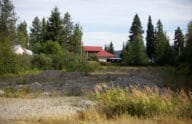
No one told him the property flooded. A culvert under the road funnels runoff from dozens of neighboring properties onto his land, pushing water across his field, through his woods and into his front yard. After a hard rain, the water moves fast enough to be dangerous. Saturated soil loosens tree roots. The runoff carries overflow from neighbors’ septic systems. And when the front of the property floods, the family’s way off the property is blocked.
For three years, Rob asked for help. He contacted the township road department, the township trustees, county soil and water officials, the county engineer, the Ohio Environmental Protection Agency (EPA), the Army Corps of Engineers, and the regional planning commission. He attended township meetings. He offered the county an easement and his own labor to dig a ditch that would have solved the problem for him and his neighbors. The county declined and treated the flooding as Rob’s problem to fix. One county official told him that, in his shoes, he would place fill in the low spot himself to disperse the water.
So Rob did. When flooding demanded it, he placed fill in the feature to keep the water off his home and land.
Now, the Ohio EPA is suing him. The agency claims the portion of his property bordering the culvert is a “water of the state,” that filling it required state and federal permits, and that Rob created a public nuisance. Before the case is even decided, the agency has asked the court to order him to remove the fill and reopen his property to flooding.
The law says otherwise. In 2023 under Sackett v. EPA, a case PLF brought to the Supreme Court, the justices held that the Clean Water Act reaches only relatively permanent bodies of water — streams, rivers, lakes — and wetlands that are indistinguishable from them. For features like Rob’s, which hold water only after rain and sit dry most of the year, Ohio’s own water pollution law adopts that federal line. The nearest real waterway, Darby Creek, lies well beyond the feature across normally dry ground, and there is no natural connection between the two. Ohio law also exempts agricultural activity from its nuisance statute and recognizes necessity as a defense when someone acts to prevent a greater harm. Rob placed fill to protect his family and to prepare land for farming, after every other option failed.
With the help of Pacific Legal Foundation, Rob is fighting back. Sackett drew a line that lets government protect real waters while leaving landowners free to make their property productive. Ohio chose to follow that line, and the Ohio EPA cannot ignore state law when it doesn’t like what a landowner does with his property. If it can, no one who owns low ground in Ohio can safely keep water off his own home.
A win for Rob would confirm that states adopting the federal definition of waters of the United States before Sackett cannot ignore changes to federal law, and that people who work to turn idle land into farms, homes and livelihoods are not polluters for doing so.
What’s At Stake?
- Americans like Rob Dunn must be free to protect their families and make their land productive.
- The Supreme Court's ruling in Sackett v. EPA prevents agencies from treating temporary rainwater features as protected waters.
- Environmental rules should protect real waters without keeping land idle or obstructing farms, homes, and food production.