

Introducing Free to Flourish

Last summer, Pacific Legal Foundation launched our Environment and Natural Resources (ENR) practice—doubling down on our 50+ years of success as America’s leading defender of property rights and environmental common sense.
With this new practice, our mission is threefold:
- Defend the freedom to use both public and private land productively
- Protect constitutional limits on government power
- Promote abundance through innovation
America’s vast natural resources have been instrumental in fueling the remarkable levels of progress and prosperity that we’ve come to enjoy. But in recent decades, those resources have been increasingly locked away.
Fears of imminent ecological collapse, distrust of markets, and a presumption of government control in the 1960s and 1970s led to environmental laws that treat human activity as a pollutant—prioritizing preservation over productive use and bureaucracy over innovation.
If we hope to enjoy the progress driven by our forefathers and safeguard that privilege for future generations, then we must act to reverse the trajectory of slower projects, fewer breakthroughs, and higher costs for everything built from the earth.
Launching Free to Flourish represents the next chapter in our practice’s evolution.
Going forward, you can expect to receive quarterly updates—similar to this—from a rotating pool of ENR authors, covering our casework, advocacy efforts, research, and scholarship.
Let’s dive in.
CASE UPDATES
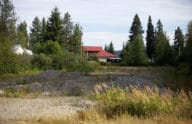
On May 3, 2007, three EPA officials showed up unannounced to PLF clients Mike and Chantell Sackett’s small residential plot in Priest Lake, Idaho. They claimed the Sacketts’ property—which is a stone’s throw away from other houses—contained a protected “wetland” and the clean gravel the Sacketts had begun spreading was “filling” the alleged wetland. Doing so without the required permitting, they claimed, violated the Clean Water Act.
The Sacketts chose to fight back.
Now, nearly 20 years and two unanimous Supreme Court victories later, the Sacketts’ showdown with the EPA has forever changed our regulatory landscape and the way federal agencies interact with millions of Americans.
The couple’s first Supreme Court victory in 2012 reaffirmed their right to challenge the government’s wetlands finding without having to follow the EPA’s dog-and-pony-show permit process.
In a landmark 2023 decision, the Supreme Court determined that the Sacketts’ land is not subject to the Clean Water Act and rejected the EPA’s claim to virtually limitless regulatory authority. That ruling effectively freed millions of acres of buildable land and cut mountains of red tape.
Today, even with the precedential winds at our back, the fight continues.
Court victories change the law—but they don’t always change the government’s behavior. Property owners across the country are still facing the same overreach the Sacketts fought to end.
Since launching our ENR practice last summer, we’ve taken on several new challenges to Clean Water Act overreach, including:
- Retired Florida pediatrician Dr. Sedigheh Zolfaghari.
- Idaho-based property owners Rebecca and Caleb Linck—who happen to live just a few miles away from the Sacketts’ property.
- Utah-based Teancum Properties.
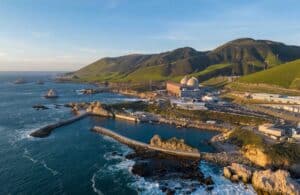
We’ve also joined California siblings John and Melinda Morgan in challenging the Golden State’s backdoor ban on new oil drilling—and we’re actively seeking similar opportunities to challenge the constitutionality of New York’s fracking ban.
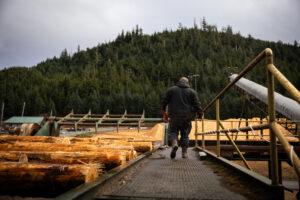
We’re representing Alaska timbermen, New England fishermen, and a sixth-generation rancher—each fighting to save their industries and livelihoods from federal overreach or neglect.
ON THE HILL
Earlier this year, for the first time in history, we saw a Public Land Order submitted to Congress for review—a seemingly technical milestone that could reshape how the federal government manages hundreds of millions of acres of public land.
In January, the U.S. House of Representatives—led by Rep. Pete Stauber (MN)—passed a resolution to repeal Biden-era Public Land Order 7917 and unlock more than 225,000 acres of mineral-rich federal land in Minnesota’s Superior National Forest. The resolution is now awaiting Senate approval.
In late February, Rep. Harriet Hageman (WY) introduced legislation to nullify the 2001 Clinton Roadless Rule. If passed, Rep. Hageman’s bill would be welcome news for remote communities around the country—including our clients in Southeast Alaska—who have been virtually cut off from the rest of society under the Rule’s restrictions on road construction across 85 million acres of federal forest land.
PLF IN THE NEWS
Florida Politics: Florida is leading the next nuclear revolution (February 2026)
California Globe: In California, you can do everything right, and still get crushed (February 2026)
Reason: This California family is suing for the right to drill for oil on their own property (February 2026)
The Washington Post: The law that is trapping America in the past (December 2025)
Real Clear Energy: To create an abundant America, Congress should pass the SPEED Act (December 2025)
The Washington Post: Even Trump’s EPA can’t get it quite right on this silly wetlands law (November 2025)
The Washington Post: A century-old law could cost these fishermen their livelihoods (November 2025)
The Orange County Register: How environmental laws are killing America’s housing supply (August 2025)
HONORABLE MENTIONS
As a reminder, all PLF clients are represented 100% free of charge. If you believe your rights may have been violated, please consider submitting your case for review.
If you’d like to partner with us on any of these issues, contact PLF coalitions manager Zayna Resley.
Free to Flourish is PLF’s Environment and Natural Resources quarterly newsletter. If you agree that a better world is possible through liberty—that a thriving environment and free individuals are not in conflict—subscribe below to join the fight.