

Wall Street Journal: It Isn’t Romantic When the Labor Department Says ‘Your Mine’
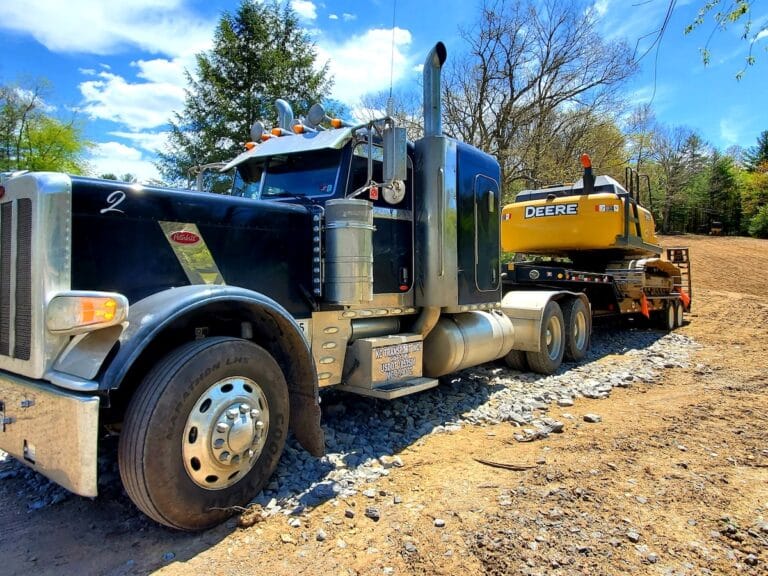
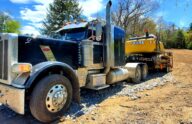
Is a truck-repair shop a mine? Yes, according to the U.S. Circuit Court of Appeals for the District of Columbia. In a divided decision, the D.C. Circuit ruled that KC Transport’s maintenance facility in Emmett, W.Va.—a gravel lot serving as a repair shop—qualifies as a “mine” under the Federal Mine Safety and Health Act. This means the Mine Safety and Health Administration is authorized to inspect it, regulate it and fine the people who work there, as if they were at a mine pulling coal out of the earth.
KC Transport doesn’t mine coal. It hauls coal, along with dirt, gravel and whatever else its customers need moved. Its Emmett shop, more than a mile from the nearest coal-processing plant and several miles from any extraction site, is where its trucks get their oil changed and their brakes fixed. There are no shafts. No tunnels. No miners. Just truck drivers and occasionally mechanics. Yet the U.S. Labor Department considers it a mine.
The circuit court’s reasoning rests on a “necessarily connected” test—if a facility is sufficiently intertwined with mining operations nearby, it qualifies as a mine under the Mine Act’s definition. The problem is that this test has no limiting principle. The majority admitted that regulated parties cannot “perfectly predict” when MSHA jurisdiction kicks in. In other words, we’ve ruled that your shop is a mine, but we aren’t telling you what else might be. Good luck!
Under the labor secretary’s reasoning, once a piece of equipment is used in mining, federal jurisdiction follows it wherever it goes. A truck that hauls coal is a rolling mine. A toolshed where a contractor stores equipment that sometimes gets used near a mining site is potentially a mine. A diner where miners stop for lunch? A church serving the spiritual needs of miners and their families and therefore “necessarily connected” to the mine operations? Don’t laugh: The labor secretary’s own lawyers, when pressed at oral argument, couldn’t rule out that a pickax used for mining remains a “mine” even when transported 5,000 miles from any extraction site.
This isn’t statutory interpretation. It’s regulatory wordsmithing—exactly the kind of bureaucratic overreach that turns ordinary small-business owners into unwitting violators of laws they had no reason to think applied to them. KC Transport had never been inspected at its Emmett facility before that March 2019 visit. If the facility were truly a mine, federal law would have required MSHA to inspect it at least twice a year. The inspector apparently wandered over after finishing a nearby inspection, walked through an open gate, and decided on the spot that he’d found a mine. That isn’t regulatory clarity. That’s a surprise.
The dissent from Judge Justin Walker gets this exactly right: A facility has to be at an extraction site or a processing plant to count as a mine. That’s what the text supports, it’s what common sense supports, and it’s what gives regulated parties a fighting chance of knowing when they’re subject to federal mine safety law.
But there’s a second problem with this case that is at least as troubling as the first and it has nothing to do with how you define a mine. It has to do with who gets to define it.
One part of the executive branch—MSHA and the labor secretary—disagreed with another part—the Federal Mine Safety and Health Review Commission—over whether KC Transport’s shop is a mine. The commission, after a full administrative proceeding, said no. The secretary then filed a petition in federal court to override the commission’s decision.
As Judge Walker explains in his dissent, that isn’t how our constitutional system is supposed to work. The executive branch is supposed to speak with one voice, and that voice belongs ultimately to the president. When two agencies squabble over who gets to regulate a West Virginia repair shop, the answer isn’t to drag the federal courts into the middle of it. The president—or someone he designates—is supposed to sort it out. The whole point of having a unitary executive is that someone is in charge.
Federal courts hear cases and controversies between adverse parties. An arm of the executive shouldn’t be suing a leg for the simple reason that as a structural matter, they can’t be adverse to each other.
What we’re left with, for now anyway, is a murky, “I know it when I see it” definition of mine that no business owner can reliably apply.
This op-ed was originally published in the The Wall Street Journal on May 29, 2026.