

The Docket: October 9, 2026
The Docket is PLF’s weekly newsletter covering the cases, clients, and policy battles shaping the future of liberty in America. You can catch up on last week’s Docket here and subscribe below to receive future editions in your inbox.
Anastasia Boden’s SCOTUS Scoop returns; California regulators dismiss a small business owner’s $249,007 wage citation—but the damage has already been done; and an Ohio landowner fights to protect his farm and family from flooding.
SCOTUS Scoop returns—religious liberty, farming, and climate change coming to the Court
She’s back! PLF’s Anastasia Boden returns this week with a new edition of SCOTUS Scoop, her biweekly newsletter—delivering sharp, liberty-forward takes on the Court’s biggest decisions and dissents.
Check out this week’s breakdown below, browse past editions, and subscribe to have future updates delivered straight to your inbox.
A hollow victory for a California car wash owner
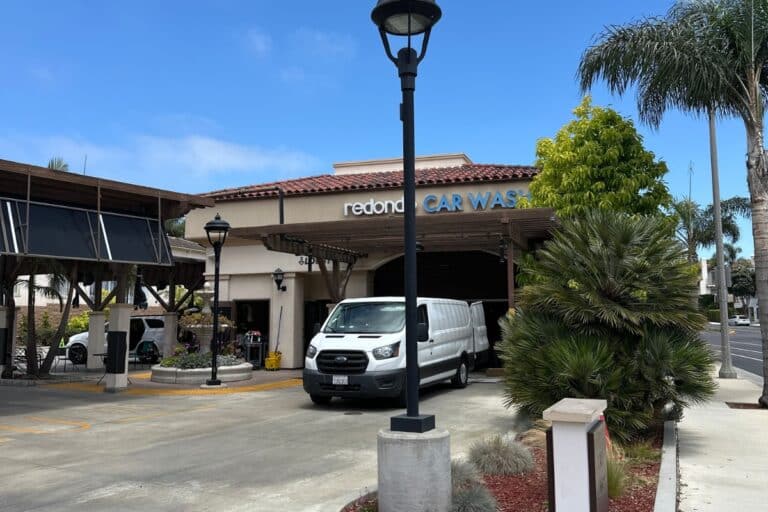
Last week, a California Labor Commissioner hearing officer dismissed a nearly-quarter-million-dollar wage citation against PLF client Christopher McKenna’s Rock N Roll Car Wash.
It’s a bittersweet victory, considering Christopher has already lost his business due to the State’s actions.
As PLF attorney Allison Daniel points out, the dismissal underscores that “these cases belong in real courts, where the government has to prove its allegations before collecting penalties.”
The Supreme Court passed on lobster boat tracking. The question will return.
On Monday, the U.S. Supreme Court declined to hear PLF client Frank Thompson’s challenge to Maine’s rule requiring lobstermen to carry a government GPS tracker on their boats at all times.
The denial leaves in place a lower court decision that lets the State track Frank, a fifth-generation lobsterman from Vinalhaven, without a warrant 24 hours a day, whether he is hauling traps or taking his family out for a day on the water.
The practical effect of the Court’s denial is clear. About 1,200 Maine lobstermen hold the federal permits that trigger the requirement, and every one of them can be tracked. The question Frank raised—whether the government can skip the Fourth Amendment’s warrant requirement because it has regulated an industry heavily—remains unanswered.
Ohio landowner fights to protect his farm and family from flooding
Rob Dunn spent three years asking different local, state, and federal officials for help to mitigate the flooding on his property. For three years, he was stonewalled. Eventually, he did what anyone would do to protect their farm and family and took matters into his own hands.
After he shifted fill dirt into a low area of his property to disperse flood waters and his neighbors’ septic runoff during heavy rains, the Ohio EPA sued him—claiming a portion of his property borders a “water of the state,” that filling it required state and federal permits, and that Rob created a public nuisance.
With PLF’s help, Rob’s now fighting back, arguing that the Supreme Court’s ruling in another PLF case—Sackett v. EPA—prevents agencies from treating temporary rainwater features as protected waters.
This retired general fought for his country. Now he’s fighting for his property.
After a more-than-30-year military career, Brigadier General Billy Don Farris looked forward to retiring and spending time with his wife on their idyllic 80-acre farm in Gloucester County, Virginia.
What the couple never could’ve imagined, however, is that their dream getaway would become a living nightmare—regularly overrun by entitled and often-aggressive hunters chasing packs of hound dogs under the supposed protection of Virginia’s right-to-retrieve laws. Worse still, when Billy Don met with local law enforcement to address the issue, the sheriff made it clear that in his eyes, Billy Don—not the hunters—was the problem.
Now, Billy Don has teamed up with PLF to file a federal lawsuit aiming to restore the rights of all Virginians to exclude trespassers and live in peace.
Nursing home challenges federal agency’s power to fine without a jury
When the government seeks civil money penalties, the Seventh Amendment entitles the defendant to a jury trial. Agencies cannot evade that guarantee by routing their own enforcement actions through in-house tribunals where they investigate, prosecute, and adjudicate.
But that’s exactly what happened to Sligo Creek Center, a Maryland-based nursing facility, after the Centers for Medicare & Medicaid alleged that the facility violated federal infection-control requirements, and the Department of Health and Human Services imposed a fine of nearly $1.5 million.
Now, with PLF’s help, Sligo Creek is asking the Supreme Court to step in and affirm its constitutional right to a fair trial.
PLF in the News
- The Orange County Register: Washington’s energy permitting fast lane is slow
- The Dispatch: The American Bar Association’s discriminatory diversity push is ending—for now
- National Review: Congress can finally drag federal ‘guidance’ into the light
- The Dispatch: Florence Allen was more than a first