


New Jersey-based developer PSEG Renewable Transmission wants to build a 67-mile-long high-voltage electric transmission line in Maryland. After the landowners whose homes, farms, and businesses would be affected by the project denied PSEG’s requests to enter their properties to conduct surveys and studies, the developer sued them in federal court in April 2025.
PSEG asked Maryland’s federal district court to order the landowners to throw open their gates and allow PSEG’s surveyors to enter their properties. Maryland law only authorizes entry by surveyors working for the State or for a body “having the power of eminent domain”—the government’s power to take private property for public use, in limited circumstances and with specific constraints.
PSEG claimed it already had that power, even though Maryland has not delegated it. Under state law, PSEG must obtain a Certificate of Public Convenience and Necessity from Maryland’s Public Service Commission before exercising eminent domain powers. PSEG applied for a Certificate in December 2024, and the Commission has yet to decide whether the transmission line is needed and where it can go, if approved. Despite that, in June 2025, PSEG sought, and the federal court issued, a preliminary injunction—a fast-tracked order that comes before a case is decided—letting PSEG “enter” and “remain on” the landowners’ properties from then until the State makes its decision. This was a novel use of a preliminary injunction, which is most commonly issued to preserve the status quo pending a trial on the merits, and not, as here, to dramatically alter the rights of the parties.
The injunction allows PSEG to exercise power of the Maryland government, even though the Maryland government has not given that power to PSEG.
In other words, an unelected and unaccountable private company is exercising government power without actual authorization because a court allowed it to use a judicial shortcut. And Marylanders’ rights are being violated as a result.
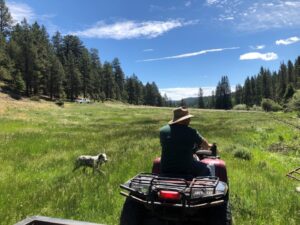
One Maryland family bought a rural parcel of land to enjoy nature and hunt together. Now that PSEG has been given blanket authority to enter their property at any time without disclosing its presence, however, the court has required the landowners to request permission from PSEG to hunt on their own land.
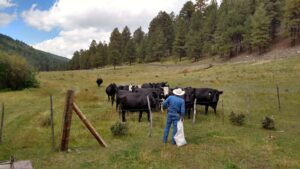
For a farming family in the area, PSEG’s unpredictable surveys threaten the health and safety of their sheep and goat herds. The farmers maintain strict disease management and biosecurity protocols for their herds’ well-being, but their work can be compromised in a moment by surveyors unknowingly carrying viruses from one property to another.
Yet another family used their life savings to buy a 76-acre farm they hoped to pass down to their children. Now, they fear for their young children’s safety, with strangers asserting the power to freely access their property—and their own right to refuse entry trampled.
Represented at no cost by Pacific Legal Foundation, a group of the affected landowners is asking the United States Supreme Court to reverse the district court’s order. Their petition argues that a preliminary injunction is meant to keep the status quo while the Court decides the case. Here, the preliminary injunction gave PSEG exactly what it sued for, in a way no later ruling can undo, based on a prediction that PSEG “likely” already has the power it claims. Their petition argues that no other federal appeals court has gone that far in approving pre-condemnation entry.
If their petition is successful, it will strengthen protections for property owners’ rights and make clear that courts cannot be used as a shortcut around state law’s limitations on the use of eminent domain.
What’s At Stake?
- The development of infrastructure must be accomplished without trampling on the rights of owners whose property is in the path.
- Americans have a constitutional right to use their own property and to refuse trespassers access to it.
- Courts cannot use preliminary injunctions to give eminent domain power to private companies contrary to state law. Such grants of authority must be expressly authorized by the state.