

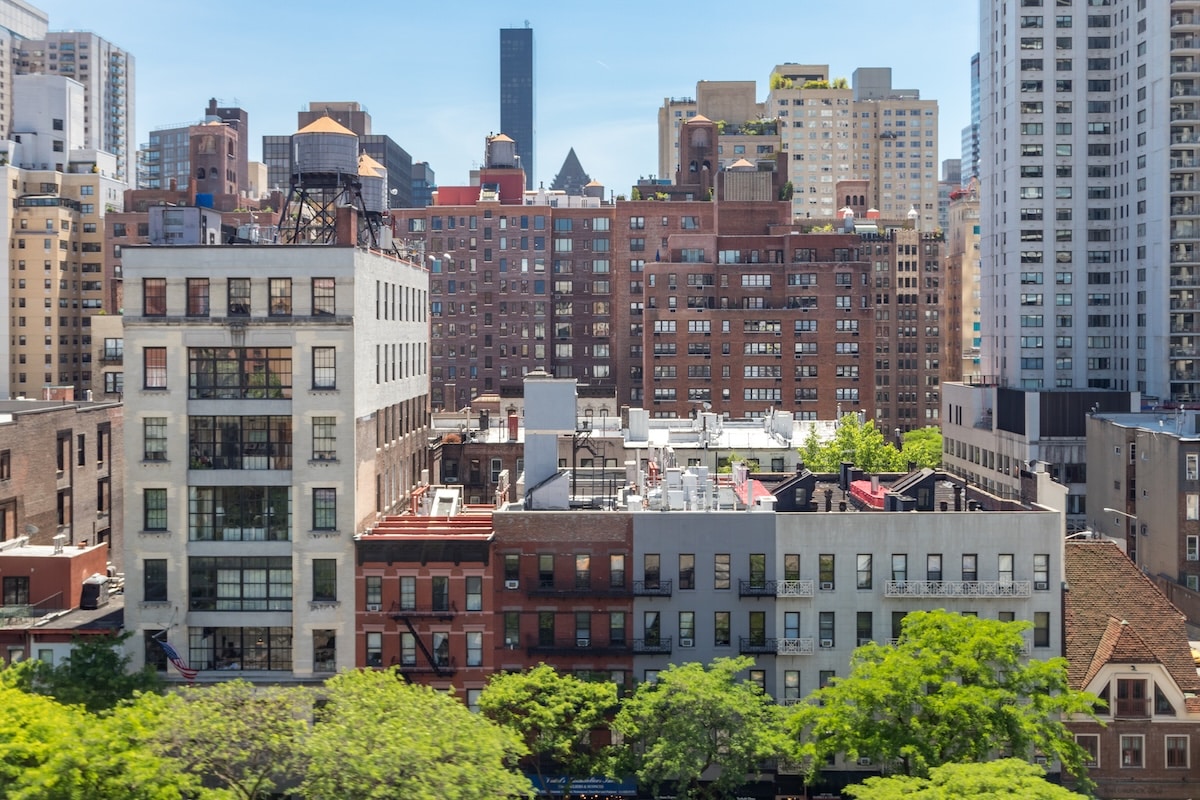
In 2020, Lynette Ciner and her husband Richard took control of her childhood home: a 100-year-old Manhattan apartment building with a commercial space on the first floor.
The building is an integral part of Lynette’s family history. Her Italian American grandparents bought the building in 1940 and, in the decades that followed, raised their family within its walls and grew their tomatoes in its back garden. They rented out the building’s apartments to various tenants and operated small businesses out of the storefront below. Her parents met there when it was a diner. Years later, when Lynette was born, her family ran a bookstore. They always “had their thumbs on the city’s pulse,” she recalls, fondly remembering the days when the storefront sold cameras in her youth and when it became a record store in the ’70s.
When the Ciners took control of it, they found that the century-old building required substantial maintenance and repair work, totaling over a million dollars. They want to improve the building by removing dated building materials like lead paint and asbestos, fixing leaks in the roof, bringing the electrical system to code, and adding a sprinkler system.
But Lynette and Richard are retirees, not millionaires. To fix the building, they have to increase the rent enough to cover operating expenses. Under New York’s Rent Stabilization Law, however, they’re locked into decades-old constraints capping their income at a fraction of what’s needed to keep the lights on and begin necessary repairs. Their Gramercy Park units bring in an average of just $850 monthly—in stark contrast to neighboring buildings’ rents, which start at $6,100.
In 2022, Lynette and Richard filed a lawsuit arguing that New York City’s Rent Stabilization Law violates their Fifth Amendment rights by taking their private property to support a public housing project without compensation.
New York courts initially dismissed their lawsuit because the Ciners had not applied for an exception to the Rent Stabilization Law, even though they are ineligible and would not be granted one even if they applied.
In July 2026, the Ciners asked the U.S. Supreme Court to take up their case and overturn the lower courts’ dismissals. Represented free of charge by Pacific Legal Foundation, they argue that the government cannot use administrative technicalities to bar property owners from the courts, and that if New York wants rent-controlled units for its residents, it must fairly compensate building owners for the property taken—not place the financial burden of a public housing project onto private individuals.
What’s At Stake?
- The Constitution requires the government to pay just compensation when it takes private property for public use. Preventing owners from receiving fair market value for their rental units is a taking and is unconstitutional.
- If New York wants rent-controlled units for its residents, it must fairly compensate building owners for the property taken, not place the financial burden of a public housing project onto private individuals.
- The government can’t require Americans to exhaust every conceivable administrative appeal before challenging constitutional violations in court.