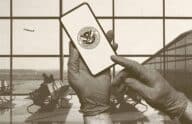


In July 2025, a school superintendent made national news for his willingness to challenge unsettling Fourth Amendment violations by U.S. Customs and Border Protection. Wilmer Chavarria, superintendent of Vermont’s Winooski School District, has been a naturalized American citizen since 2018. He often travels internationally to see family abroad. In July 2025, he was returning to the United States after visiting his mother and other family members in Nicaragua when CPB detained him at Houston’s George Bush Intercontinental Airport.
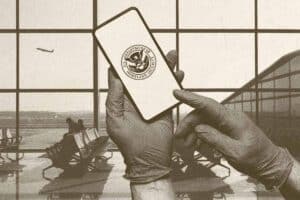
Federal agents told Mr. Chavarria that he did not have Fourth Amendment rights at the border. They denied him legal counsel, verbally abused him, and seized his personal and work electronic devices without a warrant and despite his objections.
Mr. Chavarria refused to give the agents passwords to his school-district-owned laptop and tablet due to concerns that they might access and duplicate confidential student data. He was also concerned that agents might try to access his work email through his personal phone.
After hours of threats and questioning, Mr. Chavarria finally secured assurances that the agents would not access or copy student data. Only then did he tell agents they could search his devices. However, the agents then took both his personal and work devices to another room to search, refusing to tell Mr. Chavarria what they were looking for or why.
Over four hours after they had initially detained him, the agents let Mr. Chavarria go and returned his and the school district’s property. They gave no explanation for why he had been detained in the first place or what information they had examined or taken from his devices in their searches.
Adding insult to injury, one of the plainclothes officers stopped Mr. Chavarria as he was being released to shake his hand and praise him for his resilience during the detention. Because of his unflinching commitment to his students’ rights, the agent said he would be proud for his children to attend a school with a superintendent like Mr. Chavarria.
Wilmer Chavarria refuses to let what happened to him go unchallenged.
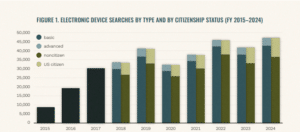
Under a Directive issued in 2018, CBP agents claim the power to conduct warrantless searches of Americans’ personal devices within an expansive “border zone” encompassing any location within 100 miles of U.S. borders. This so-called “border exception” places approximately 228 million Americans, about two-thirds of the nation’s population, in an area where federal agents may deny and violate their Fourth Amendment rights with impunity—a fact that has led the number of warrantless searches of electronic devices to increase by over 450% between 2015 and 2024.
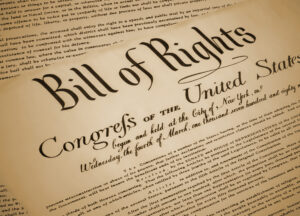
Americans don’t surrender their constitutional rights as the price of international travel. CBP policies that claim to give its employees the power to search and seize electronic devices without a warrant violate the Fourth Amendment and therefore should be set aside.
Represented at no cost by Pacific Legal Foundation, Chavarria filed a lawsuit challenging CBP policies that federal agents use to violate the Fourth Amendment. His lawsuit aims to stop the government from violating Americans’ constitutional right to be free from unreasonable searches and seizures.
What’s At Stake?
- The government cannot force Americans to surrender their constitutional rights as the price of international travel.
- Policies empowering government employees to search and seize electronic devices and their contents without a warrant violate the Fourth Amendment. These policies should be set aside.