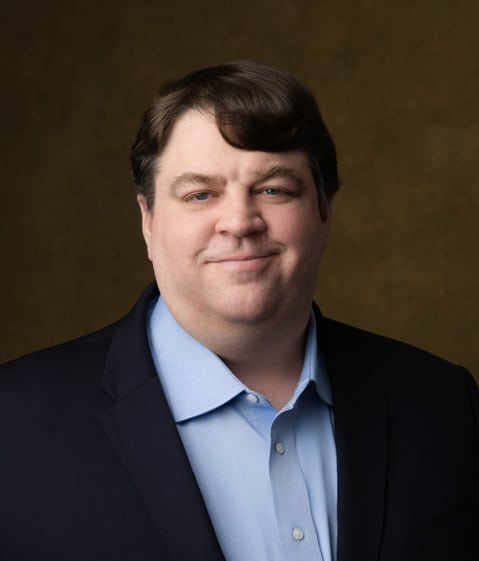


Jamie Leach is a self-described “Innovationer™” who, after a close call with her seven-month-old son, leveraged her experience as a registered nurse and mom to start Leachco, Inc. The family-owned business, based in Ada, Oklahoma, is determined to make the world safer for babies.
For over four years—eight, when you include the investigation—an overzealous government agency was just as determined to punish the company. The Consumer Product Safety Commission (CPSC) claimed that one of Leachco’s infant products was a “safety hazard” and dragged Leachco through arbitrary proceedings based on projections of imaginary consumer behavior. With company pride and livelihoods on the line, Jamie Leach and her husband fought back.
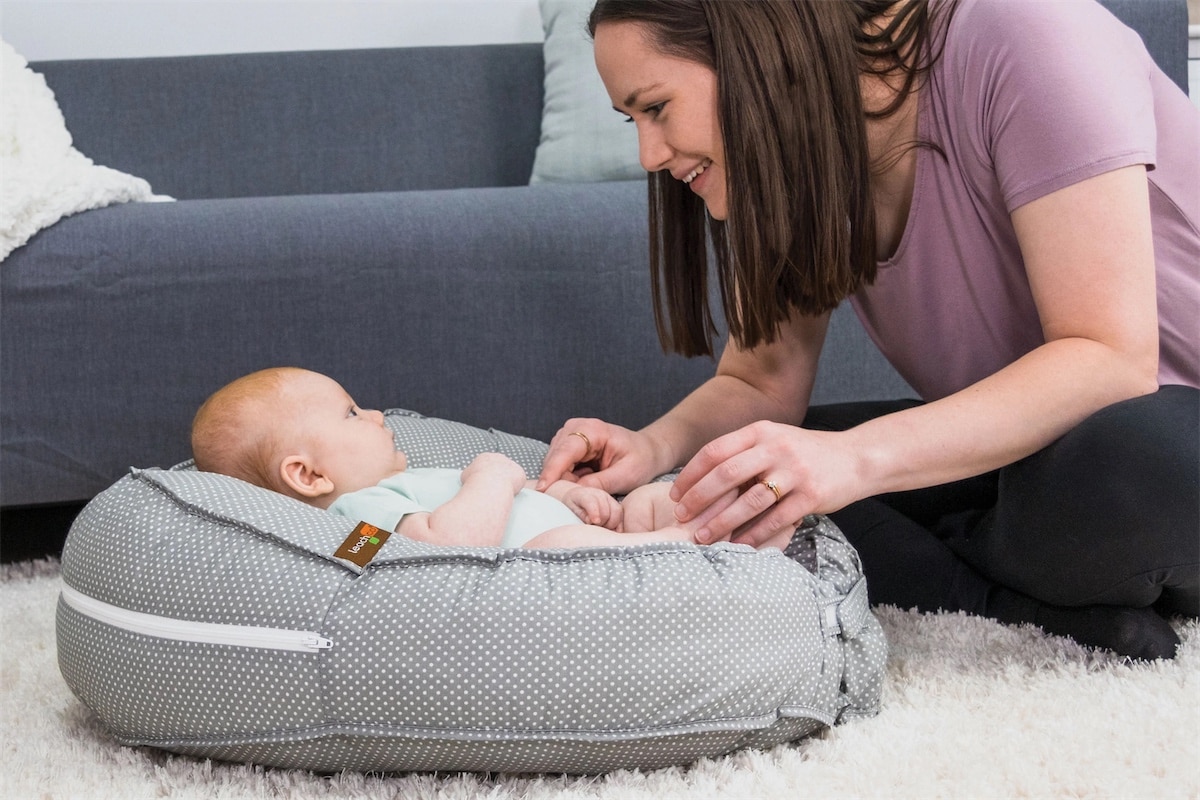
Leachco boasted a wide variety of products—all designed by Jamie with assistance from a staff of around 40 employees, including the couple’s three now-adult children. The Podster® infant lounger was particularly popular; it provided parents and caregivers a safe, supervised place for awake infants, and Leachco sold 180,000 of them since they hit the market in 2009. Each Podster came with explicit instructions and warnings for use only with awake and supervised infants.
Those warnings existed for a reason. Three infants died in Podsters—and in each case, caregivers had left the infants unsupervised, directly violating Leachco’s instructions.
But the CPSC blamed Leachco anyway. It ordered a recall, claiming the Podster was “defective” because parents and caregivers could choose to misuse it. The CPSC tried to shut Leachco down because the agency found it “reasonably foreseeable” that parents and caregivers could ignore the Podster’s detailed warnings and fail to use their own common sense.
Even on the CPSC’s own math, the Podster’s injury rate across 180,000 units sold was a fraction of a percent, while more infants died in products like cribs, which the agency itself promoted for safe sleep.
But the Consumer Product Safety Act gave the CPSC vast discretion to define “defects”—including vague factors like a product’s “necessity” and whatever else the Commission alone deemed relevant. In addition to a recall, the agency sought refunds and reimbursements, which are legal remedies the CPSC may not constitutionally seek without a jury in court.
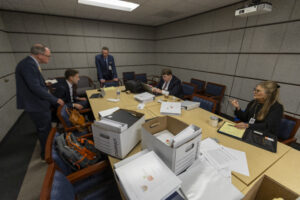
The CPSC didn’t even have to go beyond its own walls to prosecute Leachco. The agency launched an in-house administrative proceeding, in which the CPSC filed the complaint with itself and, through an administrative law judge (ALJ), told itself how to punish the Leaches—and any appeals of the ALJ’s decision would go back to the CPSC, the same entity that approved the lawsuit in the first place.
Left unchecked, the agency’s arbitrary enforcement gives small business owners like the Leaches no way of knowing when the federal government could shut them down. The government should foster innovation, not chill it, especially for smaller companies with fewer resources to fight back.
The CPSC is also unconstitutional as structured. The Supreme Court has held that executive officials must be answerable to the president, but when the CPSC was prosecuting Leachco, the agency’s commissioners could be removed only for cause, insulating them from that accountability. That means the agency could pursue small businesses through its own internal courts, with no accountability to the public.
The Leaches’ legal fees were becoming unsustainable when they found Pacific Legal Foundation’s free-of-charge representation. PLF challenged the CPSC’s in-house proceeding as a violation of Leachco’s due process rights—specifically, the right to a trial before an independent judge and jury—and fought the agency’s product-defect claims to defend the family’s right to run a lawful business.
On July 3, 2024, the administrative law judge overseeing the in-house tribunal sided with the Leaches. It concluded that the CPSC failed to prove that the Podster had any defect and that, regardless, the CPSC failed to show that any defect created a substantial risk of injury.
This conclusion was a resounding rejection of the CPSC’s claims against Leachco. The agency briefly tried to maintain its crusade, with the CPSC’s enforcement lawyers appealing the ALJ’s ruling. But on March 17, 2026, the Commission finally dismissed its complaint against Leachco—never having proven the Podster to be defective or even to pose a substantial risk of injury. In its last lawless action, the CPSC vacated the ALJ’s decision to prevent it from being cited as precedent against the Commission in the future.
Unfortunately, because the Commission ultimately capitulated, Leachco was precluded from litigating its constitutional challenges in court. The Commission’s arbitrary in-house proceedings remain standing—for now.
But Leachco’s argument on the commissioners’ removal protections was vindicated in late June 2026, when the U.S. Supreme Court held, in Trump v. Slaughter, that the heads of so-called “independent” agencies like the CPSC must be removable at will by the president.
After more than eight years of investigation and litigation, Leachco is finally vindicated. But the significant due process problems that made this ordeal possible remain unresolved—and PLF will continue fighting them.
PLF was honored to represent Leachco and the Leach family. They bravely took on a federal agency that holds enormous power and should be commended for their courage and persistence.
What’s At Stake?
- The Constitution’s due process guarantee demands that everyone has the right to a neutral adjudicator, fair proceedings, and meaningful judicial review. When an agency brings a complaint, adjudicates it, and enforces it, these constitutional protections are fatally undermined.
- Entrepreneurs and innovators shouldn’t have to worry about the government’s arbitrary definitions of what’s legal when they’ve done nothing wrong. These protections extend to individuals who simply want to run a lawful business and earn an honest living.